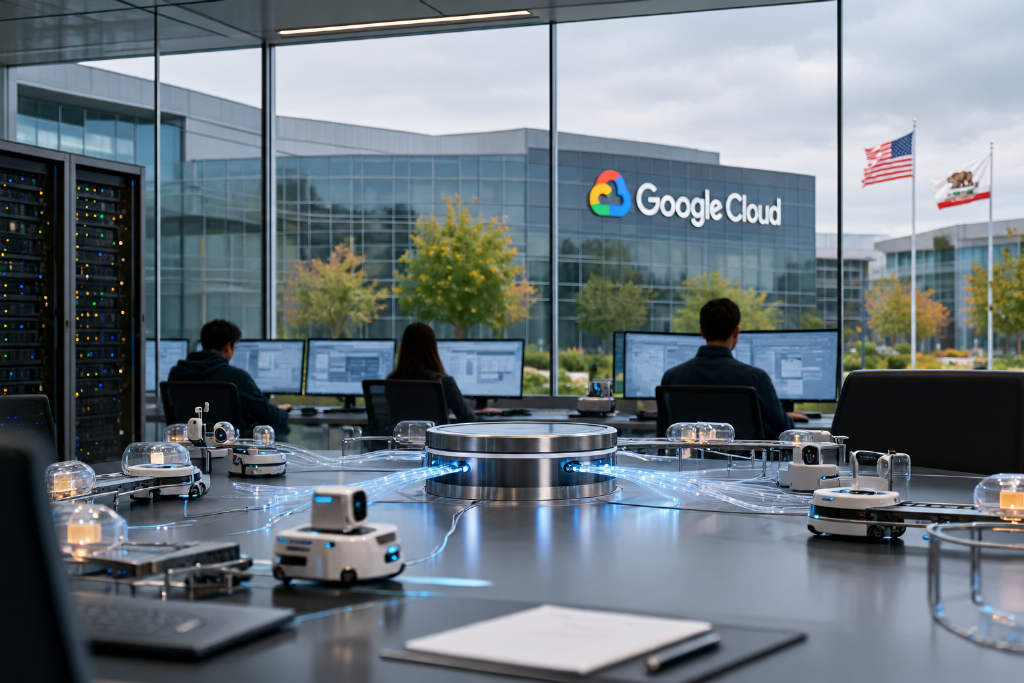
Google Cloud2026-10-02 16:30:24Google Cloud launches Spanner queues for transactional messaging in AI agentsGoogle Cloud has introduced a new Spanner queues feature designed to provide transactional messaging for AI agents, according to a Techub report citing Crypto Briefing. The company said the feature is intended to simplify AI-driven workflows, a use case that has become more relevant as businesses test and deploy agent-based systems inside enterprise environments. The update is positioned around reliability and workflow coordination rather than a broader platform overhaul. Techub’s brief said Google Cloud expects the feature to help increase enterprise adoption while reducing reliance on external systems. No additional technical specifications, rollout details, or customer names were disclosed in the source item.180
Federal Reser2026-09-30 23:26:41Kashkari says inflation remains a concern, sees one more rate hike this year and in 2027Federal Reserve official Neel Kashkari said inflation remains a concern even though the latest data came in below expectations. He said price growth is still troubling, with inflation running at about 3%. Kashkari also said he expects one additional rate hike this year and another in 2027. In the same remarks, he added that further Federal Reserve tightening may not have much impact on investment by hyperscale cloud computing companies. The comments point to a policy view that inflation is still not fully under control despite softer recent readings. They also suggest Kashkari does not see higher rates as a major obstacle for spending by the largest cloud infrastructure players.240
InsForge2026-09-30 10:57:18InsForge launches InstaCloud and raises $8 million in seed fundingY Combinator startup InsForge has introduced InstaCloud, a serverless cloud platform built for AI coding agents, and said it has raised $8 million in seed funding. The product is designed to let tools such as Claude Code and Cursor deploy and run applications directly, shifting part of the DevOps workflow from human operators to agents. InstaCloud can scale compute resources automatically with traffic and scale down to zero when idle, without requiring users to choose machine specifications in advance. Agents can manage services through CLI or MCP, deploy code, inspect logs, and work with databases and storage. One of the product’s key features is an "environment branch" system that lets agents clone a full isolated stack, including Postgres, object storage, and application containers, for code changes, database migrations, and testing. If something breaks, the branch can be deleted without affecting production. Critical actions can also be routed through human approval.610
memory2026-09-30 03:46:57Long-term supply deals are tying up memory output and lifting the price floor for consumersMajor memory makers including Samsung, Micron, SanDisk, and Western Digital are shifting more of their output into multi-year supply agreements with a small group of large customers, a move aimed at reducing the industry’s long-standing boom-and-bust cycle. The report says these long-term agreements now cover roughly 50% to 70% of production in some cases, leaving less supply available for the broader market. That shift is already showing up in end-user pricing. A 32GB DDR5 kit that averaged $122.50 in September 2025 is now priced at $567.50, while 64GB DDR5-6000 kits have climbed from about $240 to roughly $1,300 to $1,400. Cloud providers are emerging as the main buyers behind this demand, with TrendForce projecting capital spending by nine major cloud companies to rise from $922 billion in 2026 to $1.383 trillion in 2027. The debate now centers on whether long-term contracts can really weaken the memory cycle, or simply cushion profits until the next downturn. Analysts, executives, and investors remain split, while China’s rising supply and U.S. political resistance add another layer of uncertainty for the retail market.310
Bain & Compan2026-09-29 05:25:20Bain says AI needs $6 trillion in annual revenue by 2031 to justify data center buildoutBain & Company said in its annual global technology report that the AI industry would need to generate $6 trillion in annual revenue by 2031 for the current wave of data center construction to make financial sense. The report estimates that existing consumer and enterprise AI services can contribute no more than $1.8 trillion, leaving a $4.2 trillion gap that would have to come from applications and business models that do not yet exist. Bain said infrastructure deployment is moving well ahead of demand, while the cost base keeps rising. It also projected global data center spending could reach $5 trillion to $6.5 trillion by 2030, with at least 150 GW of new capacity added. The report pointed to pressure from chip, accelerator, memory, networking and other component costs, and said the economics of AI infrastructure will depend on whether application-side revenue can scale fast enough.390
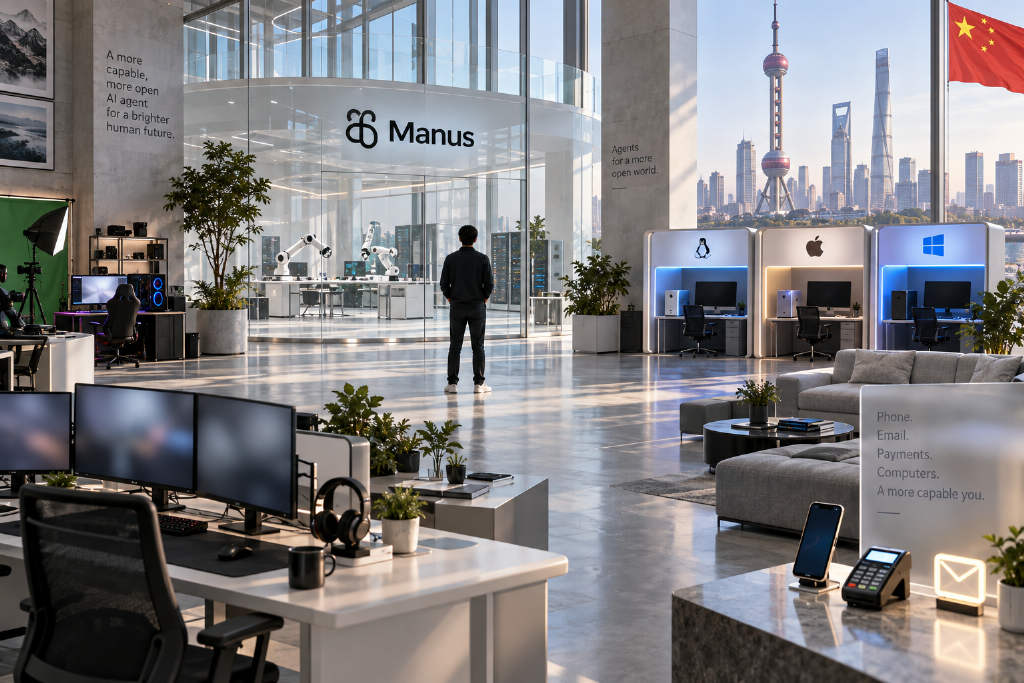
Manus2026-09-29 01:00:11Manus founder says domestic version is in active preparation as product stays focused on a general AI agentManus founder Xiao Hong said the product has been positioned as a "general AI agent" from the start, rather than a tool limited to office work. In a public post, he said Manus was created before products such as Codex and Claude Cowork appeared on the market, and compared Manus to "the business of selling computers." In his view, users may buy a computer mainly for work, but the experience becomes narrow if that machine cannot also handle video or games, so Manus should not be confined to productivity tasks alone. Xiao also outlined how the team sees creation tools and infrastructure. He said video and games are important settings for unleashing creativity, and that these capabilities need to be improved through the local client Manus Studio. According to him, videos related to Cue were produced entirely with Manus Studio, without using a video generation model. Instead, the agent first wrote code and then turned that code into video. He added that, with cloud computer capabilities, Manus can also make online games that users can play together with friends. On infrastructure, Xiao said Manus cloud computers provide Linux, Mac, and Windows environments in the cloud. He also said the company is actively preparing a domestic version of Manus, while describing Cue as an entity with its own phone number, email, payment ability, computer, and sufficient intelligence.300
Anthropic2026-09-28 23:24:42Anthropic reports $4.59 billion in fiscal 2025 revenue in IPO filingAnthropic said in its IPO prospectus that fiscal 2025 revenue reached $4.59 billion, up 1,088% year over year, while operating losses topped $8 billion. The company also warned that many large customers are not tied to long-term contracts and could reduce spending in the future. As of the end of 2025, Anthropic held $20.28 billion in cash and short-term investments. It also said it plans to invest $518 billion over the next year in areas including cloud computing. The figures were cited by ChainCatcher in a brief report on the filing.330
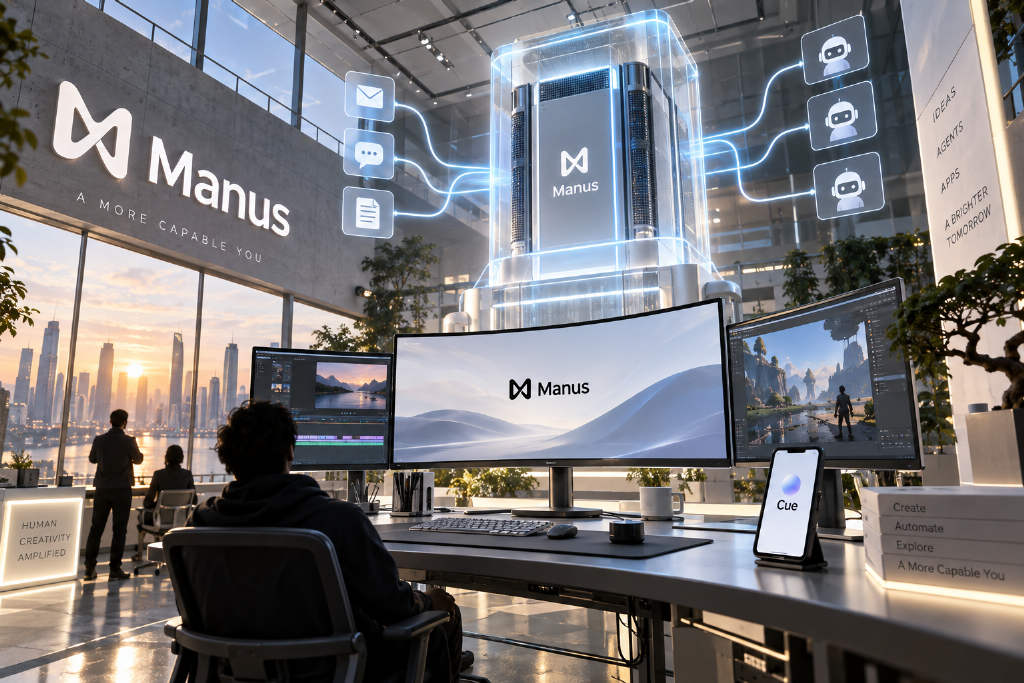
Manus2026-09-28 16:16:54Manus rolls out version 2.0 with Studio upgrade and standalone Agent app CueManus has launched version 2.0, describing the release as a broader rebuild around what the next generation of Manus should look like rather than a routine update. At the center of the release is Cascade, the company’s in-house Agent framework. In Manus’ testing, Cascade cut token consumption by 23.2%, reduced task completion time by 28.2%, and lowered operating costs by 32%. The update also adds a cloud computer designed for game servers and long-running automation tasks. Event-triggered automation is now supported as well, allowing changes in email, Slack, Notion, and similar services to start workflows automatically. On the desktop side, the app has been upgraded into Manus Studio, where users can bring in tools as needed. Manus highlighted two additions in particular: a video editor with timeline refinement and an Alchemy creative mode, and a game development environment that supports live editing, one-click multiplayer sessions, and cloud computer hosting. Manus also upgraded its Computer Use capability, which lets users control authorized computers remotely through natural language. Alongside that, it introduced Cue, a new standalone app built for personal Agents across mobile and desktop. According to the company, each Agent can have its own email, phone number, wallet, and computer, while multiple Agents can be organized into collaborative teams and connected to offline services.310